
Let’s be honest about most dog training videos on the internet. You’ve seen them: an owner brings a stressed dog into a strange facility, or a trainer shows up and immediately starts slapping a prong collar on a lunging animal, shoving high-value treats in its face, or lighting it up with an e-collar. The dog freaks out, the trainer “fixes” it for the camera, and everyone hits the like button. It makes for great watching, but it’s a manufactured circus that shouldn’t be happening.
When you trap a scared, reactive dog in a novel environment with a stranger and immediately start crowding them with aversive tools or a pocketful of bribes, you are engineering a panic response. It’s a show.
Real behavioral work looks completely different, and it starts by getting the owner out of the way.
If you want to see true reactivity and aggression, just put the leash in the owner’s hands. When I worked cases, I never met a dog with the owner present. I wanted them locked inside the house with strict instructions not to come out unless they saw me on the ground being ripped apart.
Why? Because I don’t want the owners around. I don’t want their negative energy, their fear, and their white-knuckle leash tension bleeding into the dog. And I certainly don’t want the heavy, complicated history between dog and owner anywhere near what I am doing.
When I walked into a client’s backyard or hopped into their vehicle alone, the dog didn’t know me at all. I brought no conditioned history. I wasn’t associated with a reward, and I wasn’t associated with a punishment. I was just a brand-new, totally blank piece of the environment that the dog had to operantly figure out for themselves. And to be clear, it usually started off negative—I was an immovable, unblinking obstacle they didn’t know what to do with. But without a human muddying the waters, dogs adapt to reality fast.
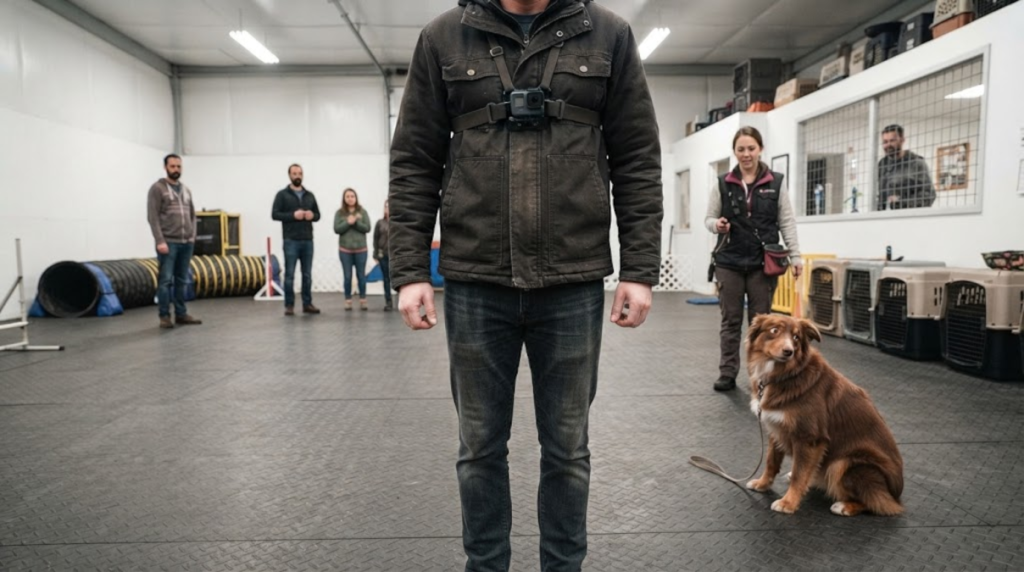
That is also why I strapped a GoPro to my chest and recorded every single minute, hands-free.
Watching your dog through the kitchen window is like watching a trainer on YouTube—it keeps you at a distance, wrapped in denial. But when owners sat down later to watch the unedited footage from my point of view, everything changed.
That chest-cam view was the ultimate reality check. It’s where owners finally saw how bad their dog really was without the buffer of wishful thinking. But more importantly, it proved a massive point about trust. They saw that I wasn’t sneaking their dog around the corner to beat them into submission behind closed doors. They saw a calm, neutral stranger letting the dog decompress and navigate the environment on its own terms.
When the owner watches that footage and realizes their dog acts like a completely different animal the second the human’s nervous energy and tight leash are removed, the mirror finally turns back on them. They stop looking for a quick fix or a magic tool, and they start realizing that sometimes, the best way to help your dog is to step out of the picture.