
If you spend five minutes scrolling through modern dog training media, you’d think surviving a walk outside requires an engineering degree. Everywhere you look, people are preaching the gospel of constant treat-dispensing or panic-inducing shock collars. Want your dog to ignore a snake? Zap them. Want them to walk past a distraction? Shove a piece of hotdog in their face every two seconds.
It’s exhausting. And more importantly, it’s fake.
When we rely entirely on gadgets, pain, or endless bribery, we are treating dogs like wind-up toys instead of living, thinking animals. Real safety—and real peace of mind—doesn’t come from a remote control or a pouch of dry kibble. It comes from agency, social intelligence, and emotional calm.
The Fear Factor: What a Minpin Taught Me About a Coyote
Imagine running into a grizzly bear in the deep woods. What’s the golden rule? Stay stone-cold calm.
Why? Because fear smells. When you panic, your body dumps adrenaline and cortisol, broadcasting a chemical signal of vulnerability. Predators are hardwired to pick up on that panic. It’s fear that invites an attack.
The exact same rule applies to our dogs.
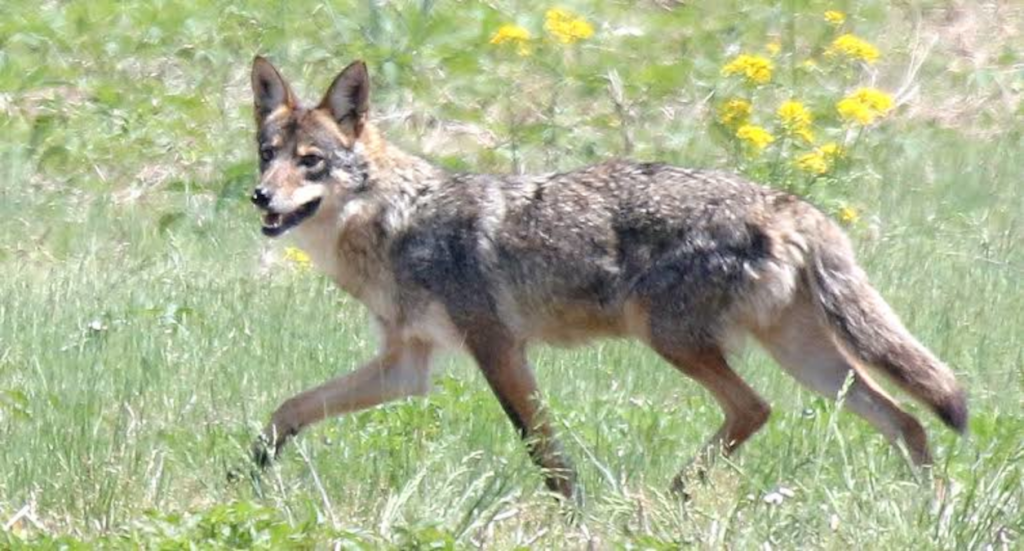
Picture this: A fifteen-year-old minpin named Monty ends up nose-to-nose with a coyote, twenty feet away. Now, when Monty sees a coyote from a distance, he puts on a show. His hackles puff up into a mohawk from his tail to his ears, and he starts stamping his front paws like an angry skunk.
Distance allows for posturing. But when that physical boundary vanishes in an instant? Monty didn’t panic, and he didn’t pick a fight. He completely shut off the theater, dialed his arousal down to absolute zero, and calmly walked around the coyote for a casual bum-sniff. A minute later, the coyote turned tail and ran off.
Why didn’t it turn into a bloodbath? Because Monty stayed entirely neutral. His lack of panic chemically neutralized the threat.
The Three Choices: Fight, Flight, or Indifference
As B.F. Skinner laid out, when an organism faces something new or challenging in its environment, only three things can ever happen: you fight, you flight, or you become indifferent.
Panic and reactivity—whether it’s an adrenaline-fueled fight response or frantic flight—get animals injured or killed. But indifference? Not giving a shit, not being scared, treating a potential threat as total background noise—that is the gold standard of survival.
You don’t build that indifference with a shock collar. You build it by stripping away the novelty of the world. Want your dog to handle snakes? Go out, get shed snake skins, and introduce that smell in a controlled, non-threatening setting until the scent loses its charge. Introduce your dog to everything you possibly can in the environment. Exposing them early removes the dangerous curiosity that gets them into trouble in the first place.
Why the “Treat Dispenser” Model Fails
If Monty had been trained solely on a transactional reward system, or if his handler had panicked and started screaming or yanking a leash, that encounter would have gone sideways fast.
Most trainers teach dogs to look at them instead of the environment. They build a dog whose entire worldview is: “When I see something scary, I look at Dad for a piece of chicken.”
That’s not confidence; that’s dependency. If the chicken isn’t there, or if the distraction is too big, the system collapses. The dog never actually learns how to read the room or regulate its own emotions.
The Power of True Agency
When you give a dog actual agency and stop micromanaging every breath they take, something amazing happens. They tap into social cognition and learn to assess a threat on their own terms.
You cannot protect your dog from everything. You cannot protect them from life itself. Just like raising a child, you can’t bubble-wrap the world—at some point, they need to stand on their own four feet and learn to deal.
When you drop the gimmicks, ditch the fear, and give a dog the space to think, they are capable of a level of mastery that no shock collar or treat pouch could ever manufacture.