
If you listen to the average vet clinic poster or late-night pet forum, you’d think a single leaf of cannabis is an instant execution order for your dog.
They’ll throw around words like “lethal toxin,” quote terrifying emergency room stats, and push you toward a shelf loaded with liver-straining NSAIDs or heavy daily sedatives. Meanwhile, millions of aging, stiff, and anxious dogs spend their golden years sleeping restlessly, walking on aching joints, and getting prescribed chemical cocktails because the world is terrified of a plant.
Let’s strip away the corporate fear-mongering, look at the actual science, and talk about what’s really going on when it comes to dogs, cannabis, and quality of life.
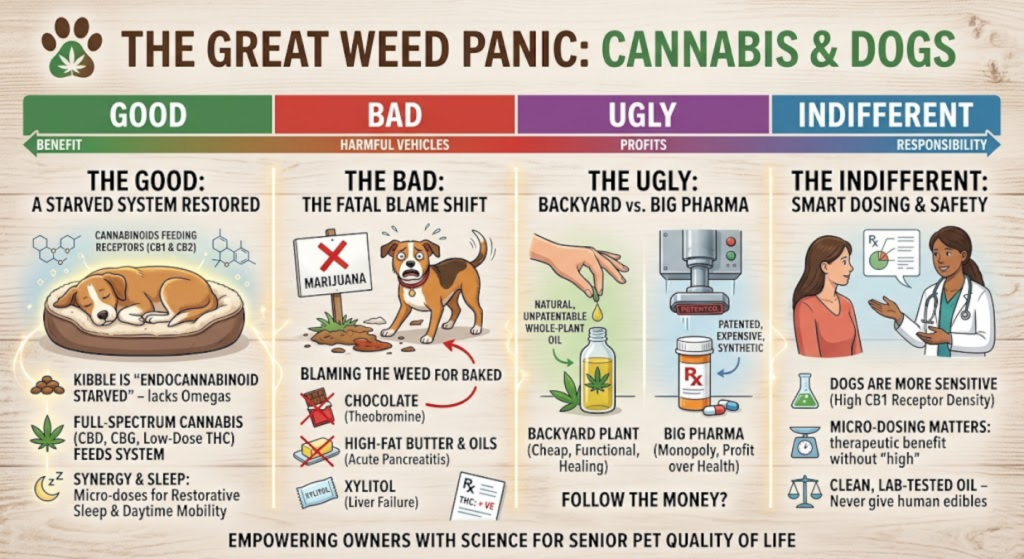
The Starved System: Why Your Dog’s Body Is Running on Empty
Every single dog (and human) has an endocannabinoid system (ECS). It’s a vast network of chemical receptors (CB1 and CB2) built into their brain, nervous system, organs, and immune cells. Its sole job is to maintain balance (homeostasis)—regulating pain, inflammation, sleep, mood, and healing.
Here is the dirty secret: our bodies—and our dogs’ bodies—are endocannabinoid-starved.
The body is supposed to build its own internal cannabinoids (like anandamide, the “bliss molecule”) out of raw dietary fats, specifically Omega-3 and Omega-6 fatty acids. But look at what goes into a dog’s bowl every day
- Ultra-Processed Kibble: Rendered at extreme temperatures that oxidize and destroy fragile Omega fatty acids.
- Zero Plant Cannabinoids: Standard dog food contains zero naturally occurring phytocannabinoids.
If a dog isn’t getting massive, fresh doses of intact Omegas to build its own cannabinoids, its endocannabinoid system grinds to a halt. The biological engine built to turn down pain and calm the nervous system is running completely out of oil.
Raw cannabis is a goldmine. It bypasses that starved internal factory and delivers over 100 active cannabinoids directly into the system, feeding receptors that have been running on empty for years.
The Good: Whole-Plant Synergy and Restorative Sleep
When a dog gets old, joints break down, systemic inflammation spikes, and body aches set in. They don’t sleep well. They toss, turn, shift positions, and wake up stiff.
When you supplement a starved system with a real, full-spectrum plant extract—a rich blend of CBD, minor cannabinoids, terpenes, and a tiny micro-dose of THC (e.g., ~1 mg for a small dog)—magic happens:
- The “Entourage Effect”: Isolated CBD is like a single instrument. When you pair it with a trace amount of THC and natural plant terpenes, they work together. The THC binds to central nervous system pain receptors to dial down chronic aches, while CBD blunts any intoxicating high.
- Deep, Uninterrupted Sleep: Pain destroys sleep. Sleep deprivation spikes stress hormones (cortisol), lowers pain tolerance, and turns a sweet, old dog into an irritable, grumpy one. When low-dose cannabinoids take the edge off joint stiffness, the dog finally gets deep, restorative sleep.
- Daytime Mobility: When an old dog sleeps like a baby at night, they wake up with lower baseline inflammation, less nervous system depletion, and a noticeable spring in their step.
The Bad: Why Vets Say “Marijuana Kills Dogs”
So if whole-plant cannabis feeds a starved system, stops pain, and restores sleep, why do vets insist it’s a lethal poison?
Because they are blaming the weed for what the baked goods did.
When a vet ER reports a “fatal marijuana toxicity” case, here is what almost always actually happened:
- A 20-lb dog found a tray of homemade pot brownies and scarfed the entire batch.
- The dog was poisoned by dark chocolate and theobromine (cardiac toxin).
- The dog was slammed with concentrated butter and fats, triggering fatal, acute pancreatitis.
- The dog ingested Xylitol (artificial sweetener), causing total liver failure.
Because the dog tested positive for THC, the headline reads: “Dog Dies of Cannabis Poisoning.”
It’s sloppy science and lazy diagnostics. Pure Δ9-THC has an extraordinarily high safety margin in mammals. A dog would literally have to eat its own body weight in raw cannabis flower to hit a chemically lethal dose of pure THC. The molecule itself doesn’t shut down the heart or lungs.
The Ugly: The Politics of Backyard Plants
Why isn’t every vet recommending a low-dose, full-spectrum plant extract for senior dogs?
Follow the money.
You cannot patent a plant that grows in a backyard garden. A pharmaceutical company can’t spend hundreds of millions of dollars patenting a raw extract that anyone can harvest for pennies.
To make money, the medical-industrial complex has to isolate a single molecule, synthetically alter it, or bottle it under a brand name so it can be controlled, monopolized, and sold at a 500% markup.
It is far more profitable to keep a dog on a lifetime subscription of monthly NSAIDs, daily nerve blockers, or heavy psychotropics than it is to let an owner place a drop of natural plant resin on a treat every night.
The Indifferent: What You Actually Need to Know
Cannabis isn’t a magical cure-all, and it isn’t completely without rules. If you’re going to be smart about it, you have to respect the biology:
- Dogs are More Sensitive: Dogs have a much higher density of CB1 receptors in their brainstems than humans. If you give a dog a massive human-sized dose of THC, they won’t die, but they will have a miserable time. They get dizzy, unsteady on their feet (ataxia), sensitive to sound, and terrified.
- Dose Matters: We are talking about micro-dosing. Micro-dosing provides therapeutic pain relief and deep sleep without causing intoxication or panic.
- Watch the Vehicle: Never give a dog human edibles. No chocolate, no butter, no sugar, no baked goods. Use clean, lab-tested oils or raw plant infusions where you know exactly what is in the bottle.
The Bottom Line
A human living with chronic, unmanaged joint pain who gets three hours of broken sleep a night will end up exhausted, irritable, and miserable. An old dog is no different.
Commercial kibble leaves their endocannabinoid systems starving, while modern pharmaceutical stacks just numb them out or strain their organs. When you give an aging animal the natural cannabinoids their body is starving for, you aren’t just giving them a supplement—you’re restoring their physical comfort, their sleep, and their dignity. Don’t let corporate fear-mongering and outdated myths stand between an old friend and a good night’s rest.
For a simple overview of how the endocannabinoid system functions in dogs and why supporting it is crucial for senior pet health, check out The Hidden Key to Your Dog’s Health: The Endocannabinoid System.
This video gives a clear, accessible explanation of CB1 and CB2 receptors in dogs, directly reinforcing how cannabinoid therapy supports physical health and nervous system balance.